Bonus Integration Across Virtual Competitions and Traditional Field Sports Wagering
Riley Richter · Jul 3, 2026
Bonus Integration Across Virtual Competitions and Traditional Field Sports Wagering
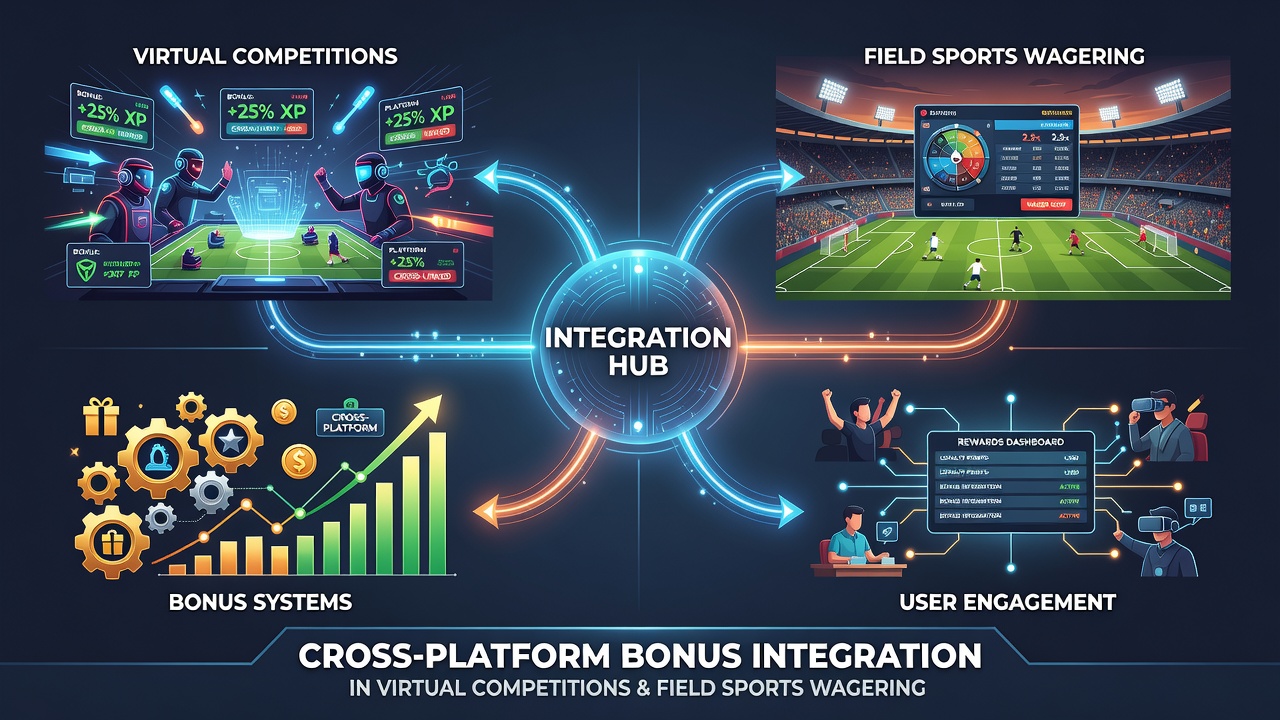
Cross-platform bonus integration refers to systems that allow promotional rewards earned in one betting environment to apply across virtual competitions and field sports wagering, creating shared value pools that users access through unified accounts. Platforms achieve this by linking user profiles via centralized databases so that free bets, deposit matches, and loyalty points transfer between digital arenas and physical event markets without requiring separate claims. Data from industry reports shows these integrations have expanded since 2024 as operators respond to user demand for flexible reward structures that span multiple categories.
Mechanics of Shared Reward Systems
Operators use application programming interfaces to connect virtual competition platforms with field sports books, allowing bonuses earned on esports matches to convert into stakes for events such as tennis tournaments or horse racing meets. A player who receives a bonus from a virtual soccer simulation can apply it directly to accumulator bets on real-world football fixtures, while loyalty tiers built through repeated virtual participation unlock enhanced odds or cashback on field sports wagers. According to the Australian Gambling Research Centre, these API-driven connections reduced account fragmentation by 28 percent among multi-category users in the first half of 2026.
Conversion rates between bonus types follow standardized algorithms that account for risk profiles of each market, so a virtual competition reward might carry a higher multiplier when applied to lower-volatility field sports outcomes. Users receive notifications through a single dashboard that tracks remaining balances across categories, and automated compliance checks ensure that bonus terms remain consistent regardless of the originating platform.
Market Growth Patterns Through Mid-2026
Figures released in July 2026 indicate that operators offering cross-platform bonuses recorded a 19 percent increase in average session duration compared with single-category platforms. Virtual competitions such as simulated basketball leagues and drone racing events have become entry points for new users who later migrate their activity to field sports once initial bonuses activate. Field sports wagering volumes have correspondingly risen as accumulated rewards from virtual play provide additional bankroll for live events during peak seasons including the European football calendar and North American tennis circuits.

Payment processors report that transaction volumes involving transferred bonuses grew steadily through the second quarter of 2026, with peak activity occurring around major virtual tournament finals that coincide with traditional sports schedules. Regulatory frameworks in several jurisdictions now require operators to disclose conversion rules clearly, and compliance documentation from bodies such as the Nevada Gaming Control Board outlines minimum standards for transparency in these transfers.
Technical Infrastructure Supporting Integration
Modern platforms employ blockchain-based ledgers or secure cloud databases to maintain immutable records of bonus origination and usage, reducing disputes over eligibility. These systems verify that a single user identity links all activity, preventing duplicate claims while allowing seamless movement of value between virtual and field sports environments. Software providers have released modular toolkits that let smaller operators adopt cross-platform features without building custom infrastructure from scratch.
Security protocols include real-time fraud detection that flags unusual transfer patterns, and multi-factor authentication protects access to shared balances. Updates rolled out in early 2026 introduced biometric verification options for high-value transfers, aligning with broader industry efforts to strengthen account security across categories.
Regulatory Considerations in Different Regions
Jurisdictions vary in their treatment of integrated bonuses, with some requiring separate licensing for virtual and field sports operations even when rewards merge. The Malta Gaming Authority updated its guidelines in 2025 to address cross-category promotions, mandating clear segregation of funds until conversion occurs. In Canada, provincial regulators have examined similar systems through pilot programs that track how bonuses influence player behavior across digital and traditional markets.
Operators must maintain detailed audit trails that demonstrate compliance with advertising standards and responsible gambling measures, particularly when bonuses encourage activity in both virtual and field sports simultaneously. International cooperation among regulators has increased to address cross-border transfers, resulting in shared databases that help prevent misuse.
Conclusion
Cross-platform bonus integration continues to evolve as technology and regulatory clarity advance, enabling users to move rewards fluidly between virtual competitions and field sports wagering. Data collected through July 2026 demonstrates measurable shifts in user engagement patterns, while infrastructure improvements support secure and transparent operations. Industry observers track these developments closely as more operators adopt unified systems to meet demand for interconnected betting experiences.