Cross-Sport Analytics Integration Connecting Football Performance Data with Esports Indicators in Layered Accumulator Construction
Greta Hughes · Aug 19, 2026
Cross-Sport Analytics Integration Connecting Football Performance Data with Esports Indicators in Layered Accumulator Construction
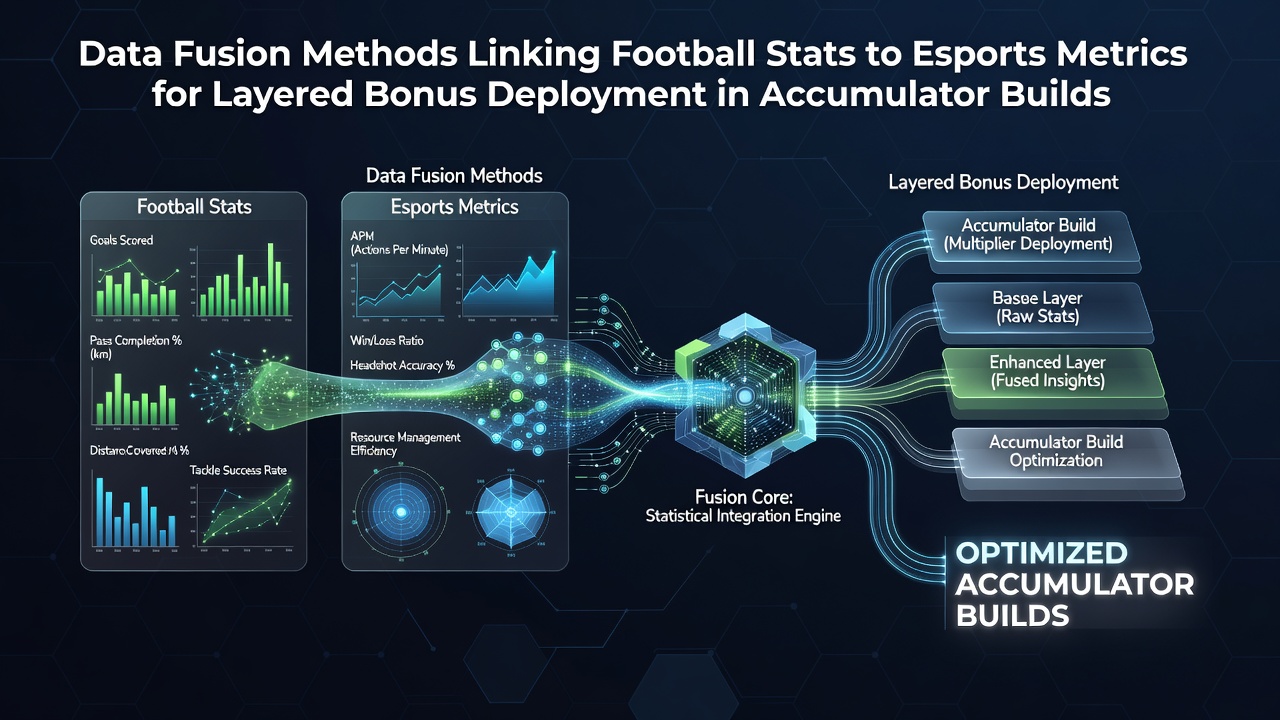
Platforms in August 2026 have expanded tools that combine football performance indicators such as expected goals and pass completion rates with esports metrics including kill-death-assist ratios and objective control percentages; these combinations support accumulator structures that apply bonuses across multiple legs. Data fusion methods process inputs from separate domains into unified models that adjust stake allocations and bonus triggers based on correlation patterns observed across seasons.
Core Components of Data Fusion in Accumulator Builds
Analysts align datasets by converting raw statistics into normalized scores that account for variance in match length and team size; football data streams typically arrive in 90-minute increments while esports sessions run in shorter rounds so alignment algorithms apply time-weighting factors before merging occurs. Researchers at institutions focused on sports informatics have documented how these normalized values feed into decision trees that rank accumulator selections according to historical payout distributions when bonuses activate at predefined thresholds.
One documented workflow begins with feature extraction from public match logs followed by dimensionality reduction techniques that isolate variables showing consistent influence across both football and esports outcomes; principal component analysis often surfaces shared factors such as defensive efficiency metrics that correlate with win probabilities in both domains. The resulting fused vectors then inform probability estimates that platforms use to calibrate bonus multipliers in accumulator products.
Implementation of Layered Bonus Deployment
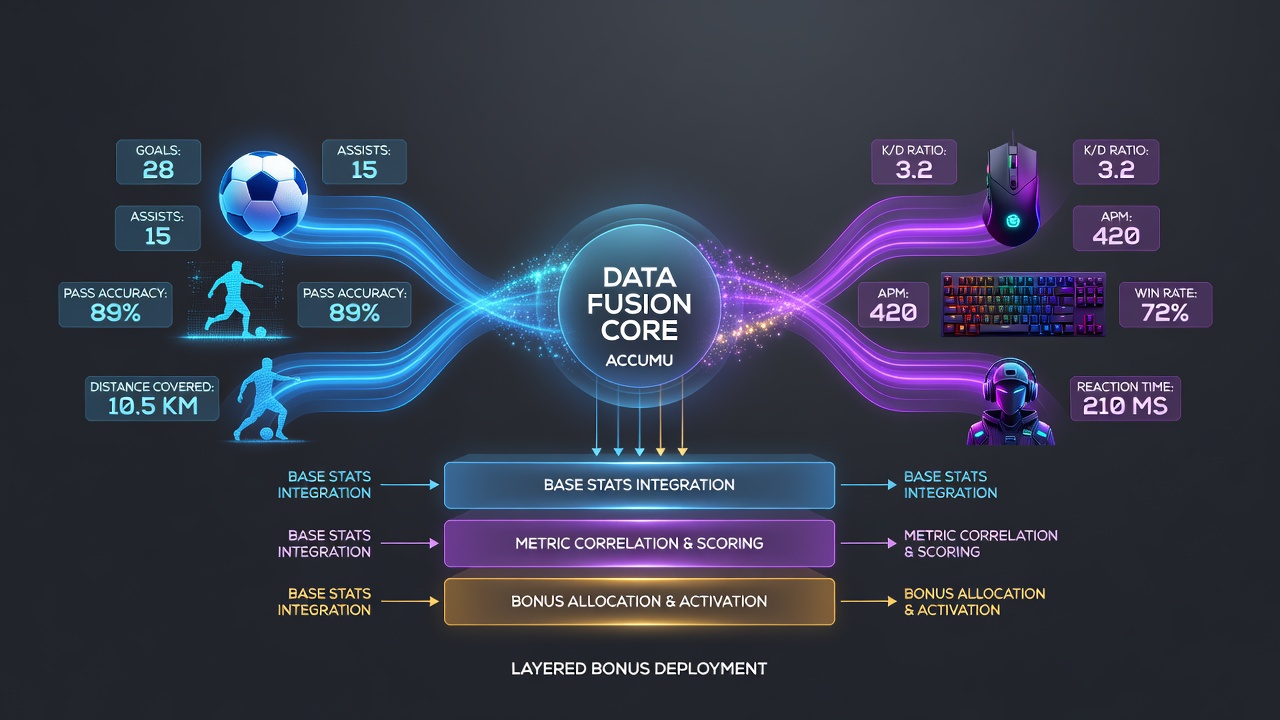
Operators structure bonuses in tiers where initial signup credits apply to the first two legs of an accumulator while subsequent legs unlock additional free bet amounts once fusion-derived thresholds are met; these thresholds derive from combined performance indices rather than single-sport results. In practice a football leg might require an expected goals differential above 1.2 while the linked esports leg needs a map win rate exceeding 55 percent before the next bonus layer activates.
August 2026 transaction records indicate rising volumes in such multi-leg products as operators publish transparent formulas showing how fused scores determine bonus release schedules. Industry reports from the European Gaming and Betting Association highlight similar patterns across regulated markets where operators must disclose the statistical models used to set bonus conditions.
Technical Methods and Validation Approaches
Bayesian updating provides one pathway for sequential incorporation of new match data into existing accumulator models while maintaining uncertainty estimates that prevent overexposure on any single leg; this approach updates posterior probabilities after each completed fixture and adjusts remaining bonus allocations accordingly. Machine learning ensembles that combine gradient boosting with neural network components have shown improved calibration when trained on fused datasets compared with single-domain baselines according to studies published in the Journal of Quantitative Analysis in Sports.
Validation occurs through backtesting on historical seasons where researchers simulate accumulator construction using only data available at the time of each match; out-of-sample performance metrics such as Brier scores and expected value calculations help confirm that fusion adds predictive lift beyond independent sport models. Platforms that publish these validation summaries allow users to review the underlying accuracy rates before committing stakes to layered products.
Regional Regulatory Context and Data Sources
Regulators in Ontario and several Australian states require operators to maintain audit trails for any algorithm that influences bonus eligibility so independent reviewers can verify that fused metrics do not create unintended advantages. iGaming Ontario guidance documents emphasize transparency around data sources and weighting schemes used in cross-product promotions. Similar requirements appear in reports from the Australian Communications and Media Authority which oversees integrity standards for digital betting platforms operating across state lines.
Academic collaborations have produced open datasets that combine anonymized football event data with esports replay files enabling external researchers to replicate fusion experiments; these resources support ongoing refinement of accumulator frameworks without relying solely on proprietary operator logs.
Practical Considerations for Accumulator Construction
Users constructing accumulators that span football and esports often begin with correlation matrices that quantify historical relationships between specific metrics across the two sports; strong positive correlations allow tighter confidence intervals around combined probability estimates while weaker links prompt wider variance bands that affect bonus layer sizing. Software interfaces now surface these matrices alongside real-time odds so selections can be adjusted before final submission.
Monitoring tools track live performance against fused benchmarks during ongoing matches and alert users when bonus thresholds approach activation; such alerts rely on streaming data pipelines that ingest both traditional sports feeds and game client APIs simultaneously. August 2026 platform updates introduced standardized APIs that reduce latency in these cross-domain streams thereby improving responsiveness for time-sensitive accumulator adjustments.
Conclusion
Data fusion methods that link football statistics to esports metrics continue to shape accumulator products through structured bonus deployment mechanisms. Regulatory frameworks in multiple jurisdictions mandate disclosure of the underlying models while academic and industry sources supply validation data that supports iterative improvement. Observers tracking developments through 2026 note sustained interest in these integrated approaches as platforms refine the technical infrastructure required to maintain consistent application across diverse sporting domains.