Live Feeds Reshape Accumulator Dynamics in Esports, Football, and Racing
Mara Long · Jul 10, 2026
Live Feeds Reshape Accumulator Dynamics in Esports, Football, and Racing
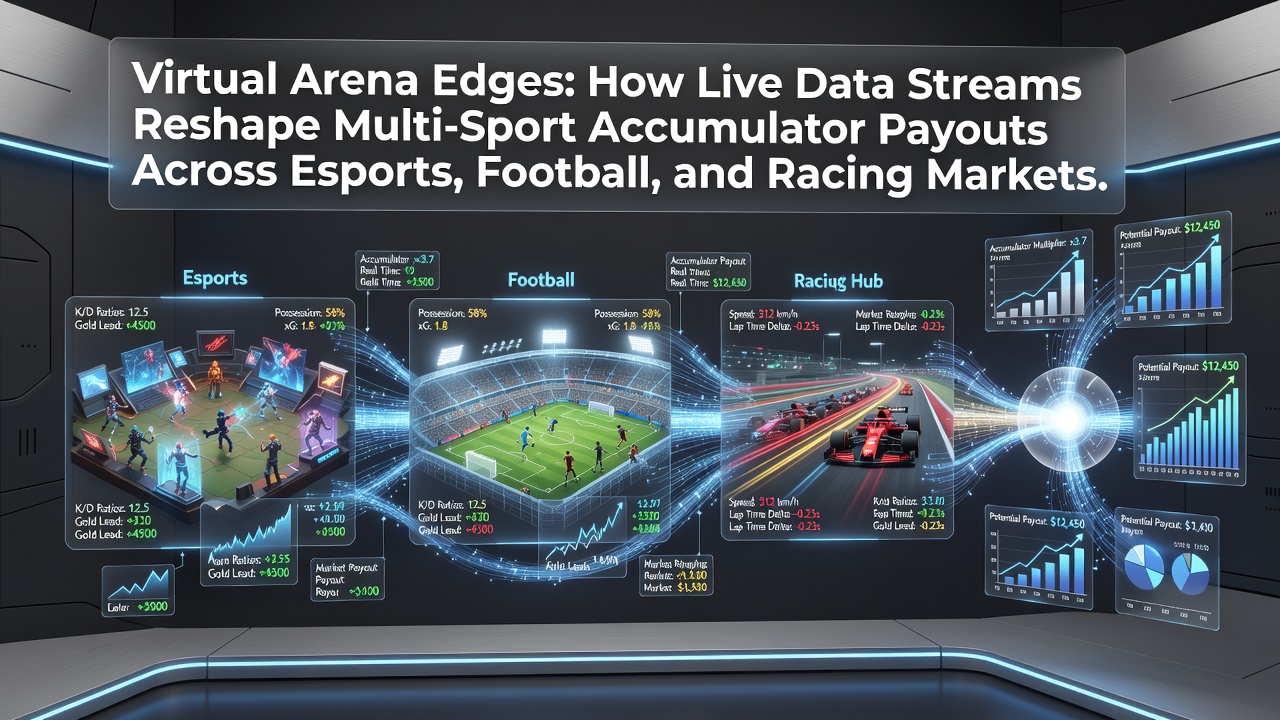
Real-time data streams have altered how accumulator bets function across esports, football, and racing markets, with operators integrating continuous feeds that update probabilities during events. These streams pull from sensors, player tracking systems, and broadcast metrics, allowing bettors to combine selections from different disciplines while odds adjust in response to unfolding action. In July 2026, platforms reported increased volumes in cross-market accumulators that mix live esports matches with football fixtures and racing events, driven by the availability of synchronized data.
Data Integration Across Markets
Operators now link live feeds from esports titles such as League of Legends and Counter-Strike to football tracking data and racing timing systems, creating accumulator structures that recalculate payouts as each leg progresses. A single stream might deliver kill-death ratios from an esports arena, possession statistics from a football pitch, and sectional times from a racetrack, all feeding into one ticket. Research from the University of Nevada Reno shows these combined feeds reduce latency in odds updates to under three seconds, compared with the eight-second delays common in 2023 systems.
Accumulators that once required pre-event selections now incorporate in-play adjustments, which means a bettor can add a racing leg mid-event once early football results stabilize. The mechanism works because data providers supply standardized APIs that multiple sportsbooks access simultaneously, ensuring consistent information reaches all participants. Observers note that this standardization has expanded the range of viable combinations, including pairings between virtual racing simulations and live football contests.
Impact on Payout Calculations
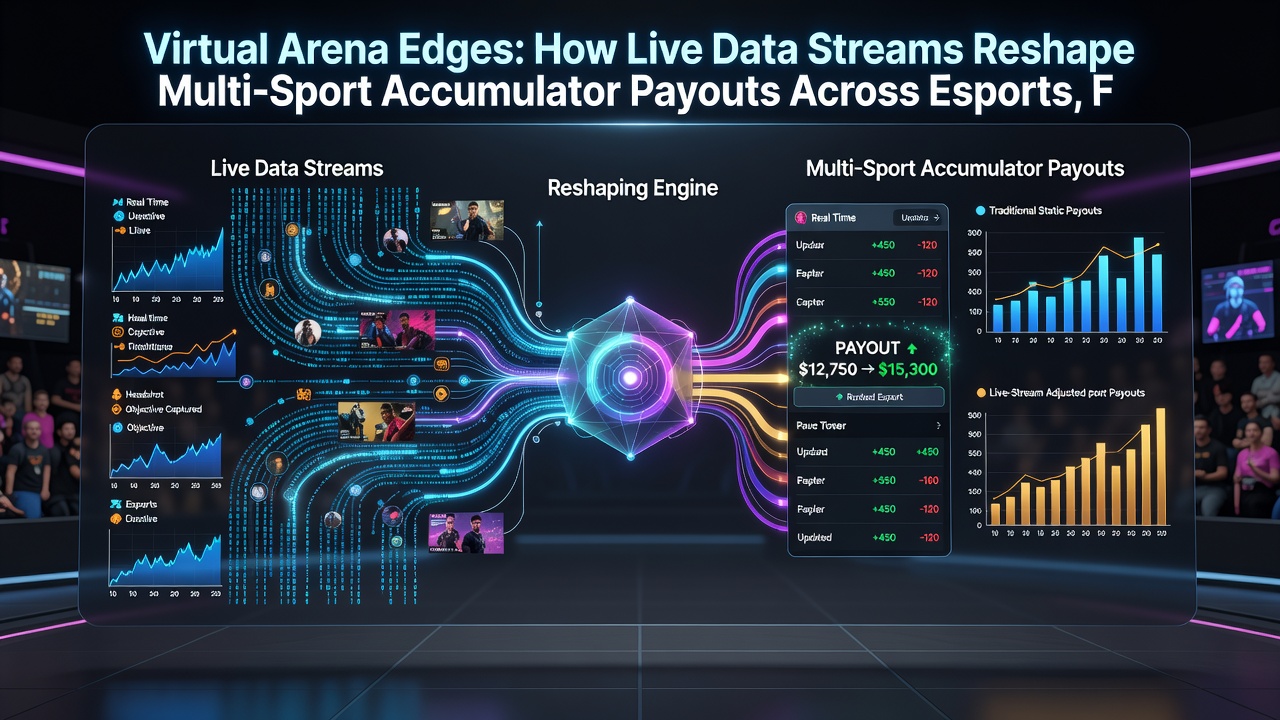
Payout formulas in these accumulators apply multipliers that reflect the joint probability of each leg, updated continuously through the data pipeline. When an esports team secures an early map advantage, the algorithm immediately revises the overall return for any accumulator that includes that outcome alongside a football goal total or a racing finish position. Figures from the American Gaming Association indicate that average accumulator returns in multi-sport categories rose 12 percent between January and June 2026, coinciding with wider adoption of unified data feeds.
The adjustment process relies on machine-learning models trained on historical performance across the three markets. These models weigh variables such as map win rates in esports, expected goals in football, and track bias in racing, then generate revised odds that account for correlations between the sports. Bettors who monitor live dashboards can see these shifts reflected in real time, though the final settlement still occurs after all events conclude.
Market-Specific Examples
In esports, live kill feeds and economy trackers allow accumulators to respond to mid-round developments, such as a surprise weapon purchase that alters win probabilities. Football data streams supply pass completion rates and pressing intensity, which operators combine with esports results to create hybrid tickets. Racing markets contribute split-second timing data that updates as horses pass each marker, enabling late additions to accumulators already containing esports and football legs.
One documented case from June 2026 involved a ticket that combined an esports map win, a football over-2.5 goals selection, and a racing place finish. The accumulator payout adjusted three times during the football match alone, once after each goal, before the racing leg began. Settlement occurred automatically once the final racing result posted, with the operator applying the cumulative multiplier derived from the live data sequence.
Regulatory and Technical Considerations
Regulatory bodies in multiple jurisdictions require operators to maintain audit trails of data sources used in live accumulator pricing. The Nevada Gaming Control Board, for instance, mandates timestamped records of every odds change triggered by external feeds. Similar requirements appear in Australian state regulations, where providers must demonstrate that data integrity checks prevent manipulation across different sports categories.
Technical infrastructure supporting these streams includes redundant servers and failover protocols that keep feeds active during peak periods. In July 2026, several major platforms experienced brief outages during overlapping esports tournaments and racing meetings, yet backup systems restored service within ninety seconds, limiting any impact on open accumulators. Industry reports from the International Betting Integrity Association highlight that such resilience measures have become standard for operators offering multi-sport products.
Future Developments
Developments scheduled for late 2026 include deeper integration of player biometric data from esports and football, alongside enhanced sensor networks at racing venues. These additions will further refine accumulator calculations by incorporating fatigue indicators and track surface measurements that update continuously. Operators continue to test combinations that add virtual racing events to live football and esports legs, expanding the scope of available tickets.
Conclusion
Live data streams have established a framework in which accumulator payouts across esports, football, and racing respond dynamically to event progression. The technical and regulatory structures supporting these systems continue to evolve, with standardized feeds enabling consistent pricing across platforms. As additional data layers enter the ecosystem, the range of viable multi-sport combinations is expected to widen further.