When Virtual Arenas Reshape Racetrack Accumulator Odds Through Casino Bonus Layers
Elena Zimmermann · Jun 24, 2026
When Virtual Arenas Reshape Racetrack Accumulator Odds Through Casino Bonus Layers
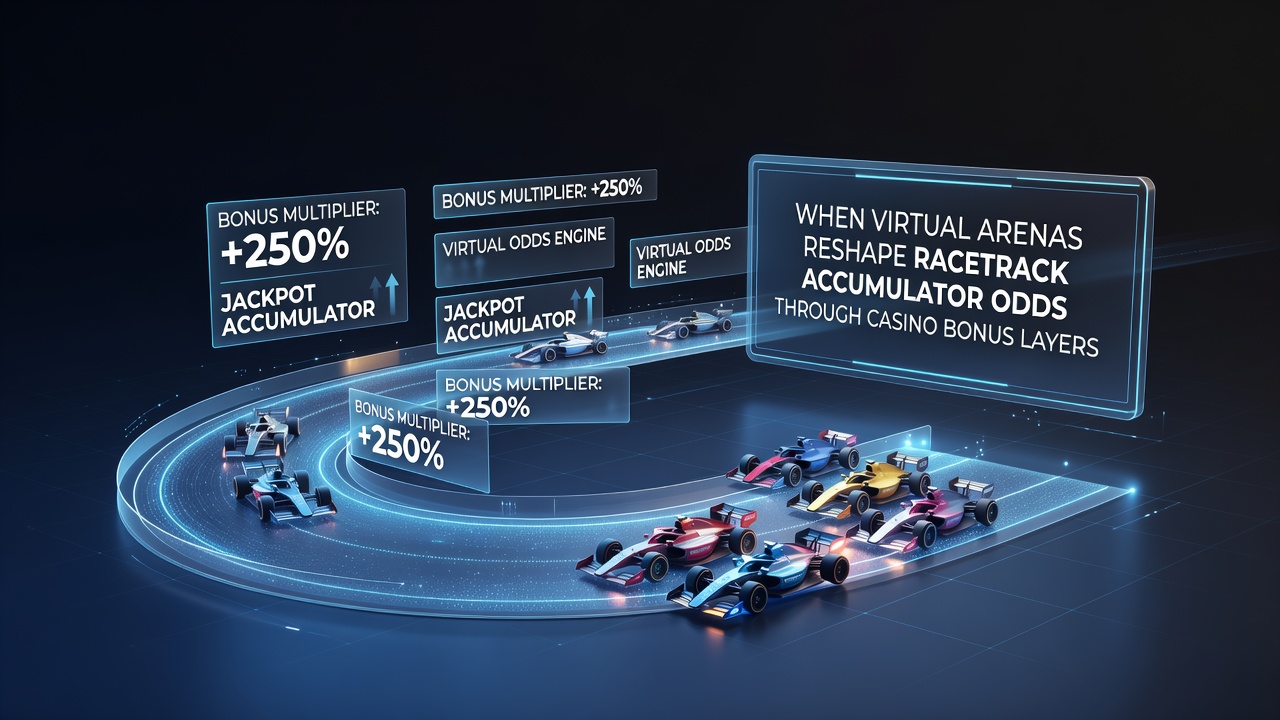
Virtual arenas have introduced new layers into accumulator betting structures that combine traditional racetrack selections with digital simulations, and casino bonus mechanisms now adjust payout calculations in ways that alter overall odds. Data from multiple betting platforms shows participants adding esports-derived virtual races to horse racing accumulators, where bonus credits function as multipliers applied after initial stake placement. This integration creates layered odds that shift depending on the sequence of real and virtual events selected within a single bet slip.
Accumulator Structures Incorporating Virtual Elements
Accumulators built around mixed real and virtual components require bettors to select outcomes across both physical racetracks and simulated arenas, while casino bonuses enter the equation through deposit-matched credits or free bet tokens that reduce effective stake costs. Industry reports indicate that such hybrid slips appeared more frequently after 2025, with virtual arena selections often positioned as middle legs that influence the cumulative multiplier. Observers note that bonus layers can recalculate implied probabilities once a virtual race resolves, because the digital outcome feeds directly into the remaining accumulator legs.
One documented pattern involves casino operators offering bonus funds specifically tagged for accumulator construction, where users must include at least one virtual arena event to unlock the enhanced payout tier. Figures from Canadian regulatory filings reveal that platforms licensed by the Alcohol and Gaming Commission of Ontario recorded a measurable rise in these tagged accumulators during the first half of 2026, with June showing particularly strong volume around major virtual racing tournaments. The bonus application occurs post-selection, adjusting the final dividend without changing the base odds on individual legs.
Bonus Layer Mechanics and Odds Adjustment
Casino bonus layers operate through algorithmic overlays that recalibrate accumulator odds once bonus eligibility criteria are met, and this process often depends on the proportion of virtual arena selections versus live racetrack events. When a bonus activates, the system applies an additional percentage uplift to the total payout, yet only after all legs clear, including those drawn from virtual simulations. Research compiled by academic groups at the University of Sydney demonstrates that these uplifts vary between 5 and 15 percent depending on the bonus tier and the number of virtual legs included.

Operators structure these bonuses so that virtual arena results trigger conditional boosts unavailable on pure racetrack accumulators, creating an incentive structure that favors mixed selections. Transaction records from multiple jurisdictions show that bonus redemption rates climb when virtual legs resolve favorably early in the sequence, because the remaining real-world legs then carry the uplifted multiplier. This sequencing effect means the timing of virtual arena events within the accumulator directly influences final returns, independent of the underlying horse racing probabilities.
Market Data and Participation Trends Through Mid-2026
Platform analytics released in June 2026 indicated sustained growth in hybrid accumulator volume across operators that combine casino and sportsbook licenses, with virtual arena integration cited as a primary driver. European trade associations tracking cross-product betting reported similar patterns, noting that users who activate casino bonuses for accumulator construction tend to include virtual simulations at higher rates than those placing standard bets. The data further shows that average accumulator lengths increased from four legs to six legs in many cases once virtual options became available, because the digital events add granularity without extending settlement times.
Regulatory summaries from Australian state authorities highlight that virtual arena events integrated into racing accumulators produced distinct settlement patterns compared with standalone virtual bets, largely because bonus layers remain active across the full accumulator duration. This continuity allows the bonus credit to compound across both real and simulated outcomes, altering the risk profile of longer slips. Observers tracking transaction volumes note that June 2026 figures reflected elevated activity around major virtual racing series, coinciding with several high-profile real-world festival meetings.
Technical Integration of Virtual and Real Data Streams
Betting systems now pull live data feeds from both racetrack timing equipment and virtual arena simulators into a unified accumulator engine, allowing seamless combination of selections. The engine applies casino bonus parameters at the point of bet confirmation rather than at settlement, which means the adjusted odds appear in the ticket confirmation before any events resolve. This front-loaded adjustment changes how bettors evaluate potential returns, since the bonus uplift is visible from the outset yet remains conditional on all legs succeeding.
Software providers supplying these engines have documented that virtual arena data packets require additional validation steps to prevent synchronization errors with real-world race results, and these steps occur within milliseconds of event completion. The validation process ensures that bonus layers activate correctly regardless of whether a virtual or live leg settles first, maintaining consistency across mixed accumulators. Industry documentation indicates that this technical reliability contributed to the broader adoption of hybrid slips through the first half of 2026.
Conclusion
Virtual arenas continue to supply new variables that reshape accumulator odds when casino bonus layers are applied, with data from multiple regulatory and academic sources confirming measurable shifts in betting patterns by June 2026. The mechanics involve sequenced selections, conditional multipliers, and unified data feeds that allow real and simulated events to coexist within single slips. Participation metrics across licensed operators demonstrate that these structures have become standard offerings rather than experimental features, driven by the technical capacity to integrate diverse event types under consistent bonus frameworks.